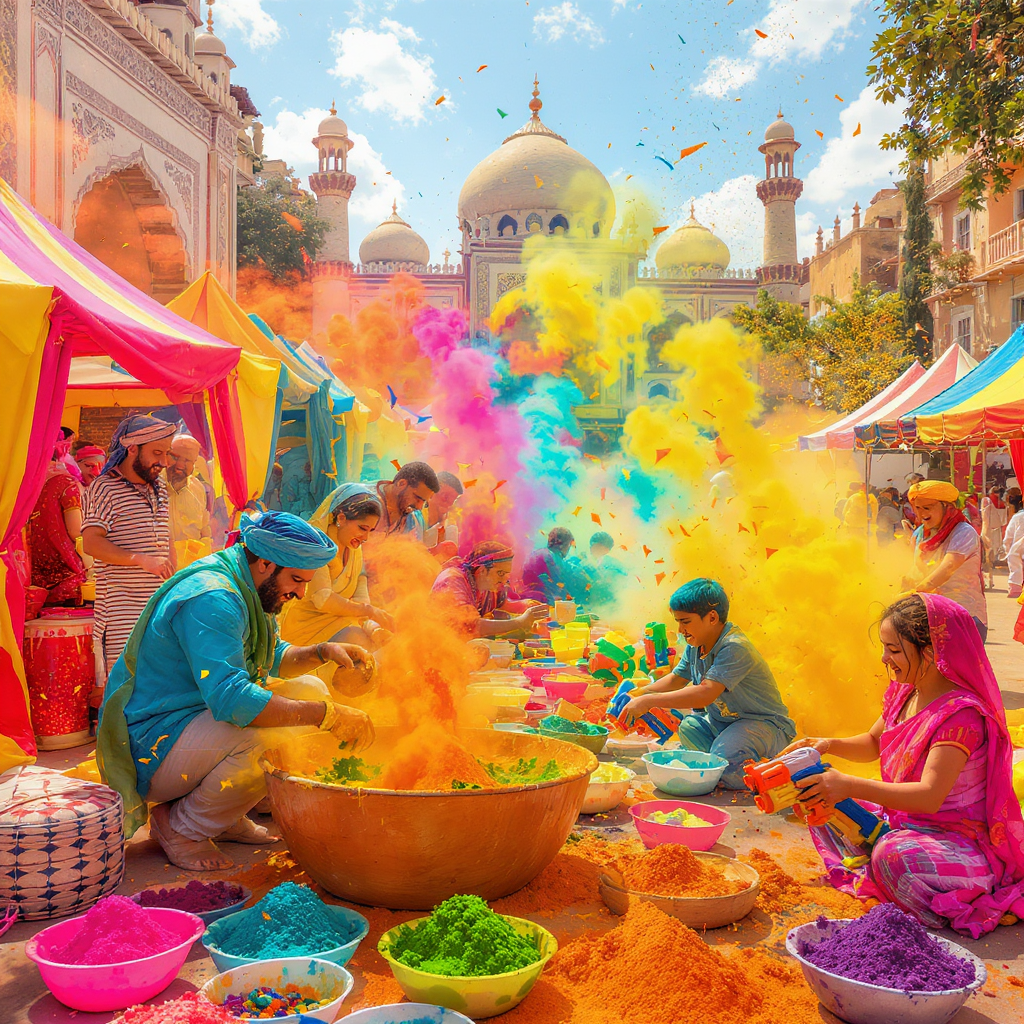
New Delhi— From temple towns in South Asia to public parks in Europe and beach fronts in Australia, preparations for Holi — the Festival of Colours — are in full swing across the globe. What began as a deeply rooted Hindu spring festival symbolising the triumph of good over evil has evolved into an international celebration of joy, unity, and cultural exchange.
In India, where Holi originates, markets have been bustling for weeks. Cities such as Mathura and Vrindavan are preparing for week-long festivities linked to the legends of Lord Krishna. Temple authorities at prominent shrines including Banke Bihari Temple have tightened security and arranged controlled entry systems to manage the expected surge of pilgrims and tourists. Local administrations have deployed additional police personnel, installed CCTV cameras, and issued advisories encouraging the use of organic colours and water conservation.

Across the border in Nepal, Holi — known locally as Fagu Purnima — is observed as a national festival. In Kathmandu and other major cities, municipal workers have designated safe celebration zones, while cultural groups are organising traditional music and dance performances. Educational institutions have also scheduled awareness drives promoting eco-friendly practices.
Beyond South Asia, countries with significant Indian diaspora populations are preparing large-scale public events. In the United Kingdom, cities like London and Leicester have announced open-air Holi festivals featuring live Bollywood music, food stalls, and colour-throwing ceremonies in public parks. Event organisers are coordinating with local councils to ensure safety measures, crowd control, and environmentally safe colour usage.
In the United States, Holi celebrations are expanding both in scale and diversity. University campuses in New York, California, Texas, and Illinois are planning cultural showcases, combining traditional dance performances with modern music festivals. Organisers report that participation extends far beyond the Indian-American community, reflecting Holi’s growing mainstream appeal. Several cities are also hosting “Holi Runs” — charity-driven colour marathons promoting health and social causes.
Canada is witnessing similar enthusiasm. Multicultural hubs such as Toronto and Vancouver are preparing for family-friendly Holi gatherings in community centres and parks. Organisers are partnering with environmental groups to distribute plant-based colour powders and discourage single-use plastics.
In Australia and New Zealand, Holi has become a vibrant outdoor festival coinciding with favourable weather. Public parks in Sydney, Melbourne, and Auckland are set to host day-long events with live DJs, yoga sessions, and cultural workshops introducing attendees to the festival’s mythological roots.
Meanwhile, in Mauritius, Fiji, Trinidad and Tobago, and Guyana — nations with deep historical ties to Indian indentured labour migration — Holi remains both a cultural and religious observance. Temples and community halls are being decorated, and local radio stations have begun broadcasting devotional songs and festive greetings. Governments in these countries often extend official recognition to the festival, highlighting its importance in national cultural identity.

In South Africa, particularly in Durban and Johannesburg, Indian-origin communities are preparing traditional celebrations while civic authorities coordinate safety and waste management plans. Organisers have emphasised inclusivity, inviting people of all backgrounds to participate in music, dance, and shared meals.
Across Europe, Holi-inspired “Festival of Colours” events are scheduled in Germany, France, Spain, and the Netherlands. While some of these events focus more on music and entertainment than religious observance, cultural associations are incorporating storytelling sessions explaining the legend of Prahlad and Holika, ensuring that participants understand the festival’s spiritual origins.
A noticeable global trend this year is the emphasis on sustainability. Event planners worldwide are promoting herbal and biodegradable colours, discouraging excessive water usage, and encouraging reusable décor. Online retailers report increased demand for skin-friendly gulal and natural dye kits made from turmeric, beetroot, and flower extracts.
Security and crowd management remain top priorities, especially in cities hosting large public gatherings. Authorities in multiple countries have outlined traffic diversions, emergency medical arrangements, and helpline numbers to ensure safe celebrations.
Digital platforms are also playing a significant role. Social media campaigns featuring hashtags promoting “Safe Holi” and “Eco Holi” are trending across regions. Virtual Holi meetups and livestreamed temple ceremonies are being arranged for those unable to attend in person.
Cultural experts note that Holi’s global expansion reflects broader patterns of migration, multiculturalism, and cross-cultural appreciation. “Holi has transformed into a universal celebration of happiness and renewal,” said a London-based cultural studies scholar. “While its roots are distinctly Indian, its message of joy and unity resonates worldwide.”
As bonfires for Holika Dahan are prepared in neighbourhoods from Delhi to Durban, and as coloured powders are stocked in supermarkets from Toronto to Sydney, Holi 2026 stands as a vivid example of how a traditional festival can transcend borders. Whether observed through devotional rituals, cultural performances, or exuberant colour-throwing gatherings, the spirit of Holi continues to unite communities across continents in a shared celebration of colour, hope, and togetherness.